Creative
Three formats, none of them standard.
A lectern, a fan ring and a trailer — three shapes built around what has to be seen, not around a cabinet catalogue.
3 series · 3 builds · Built to order
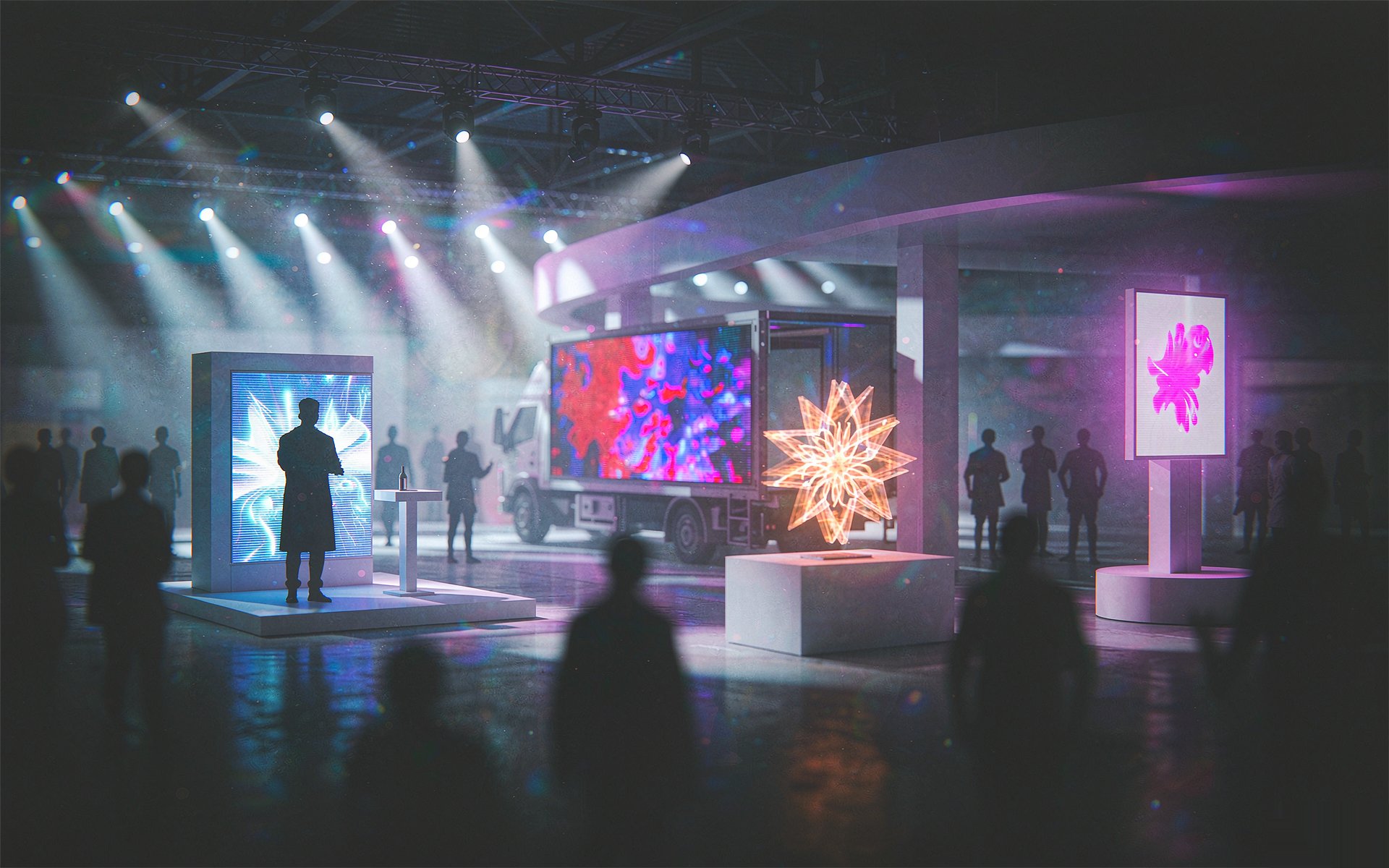
A lectern, a fan ring and a trailer — three shapes built around what has to be seen, not around a cabinet catalogue.
3 series · 3 builds · Built to order
Three builds, one series each. Pick the shape the job needs.
All three creative series on this page.


 +0

A lectern that carries the screen
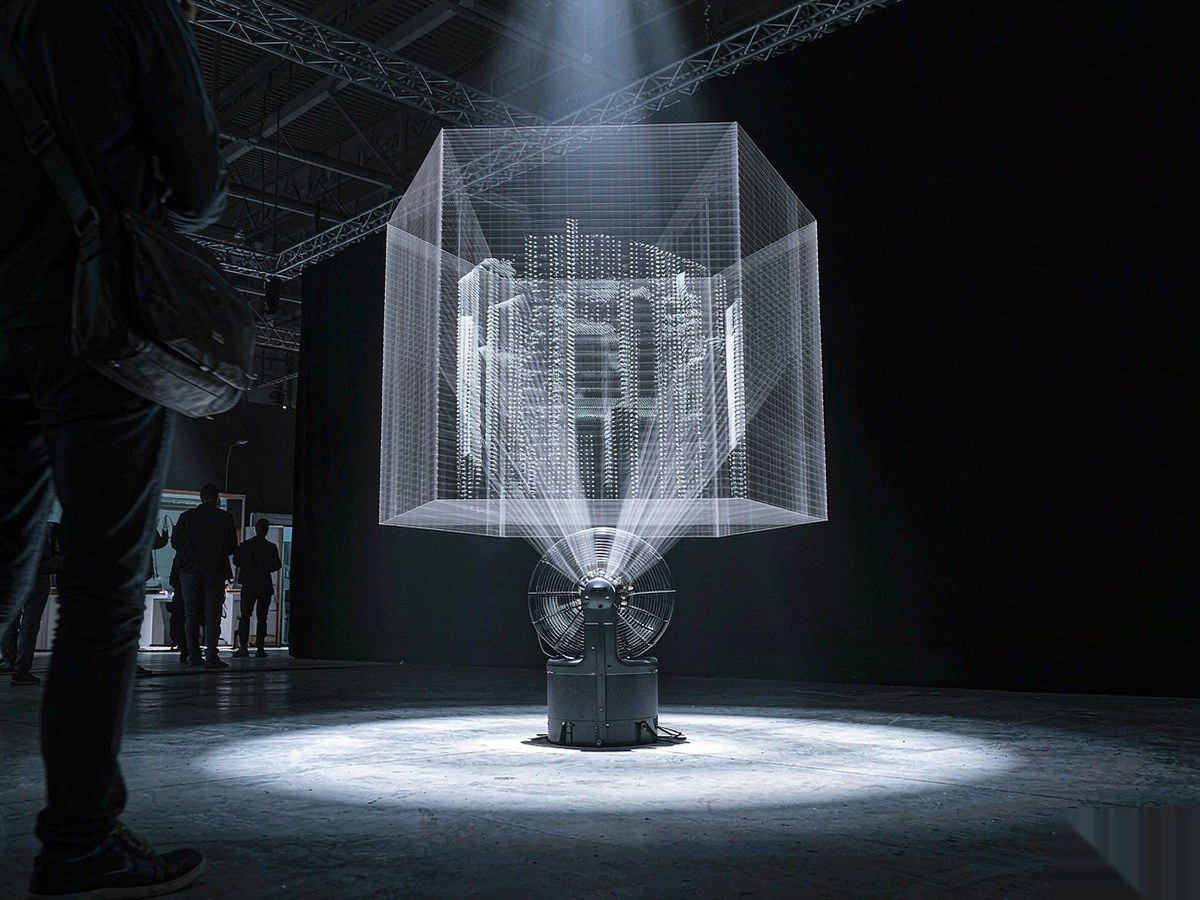

A fan that draws light in mid-air


 +0

Mobile media that drives to you
Not a filter — three formats, four kinds of room. The catalogue above is short on purpose: a custom build is chosen by the brief, not by narrowing a list.
Launches, boardrooms and conference stages — the presenter's own screen.
Awards shows and keynote stages, where the lectern is part of the set.
Match-day activations and fan zones, where the screen has to arrive on wheels.
Festival grounds and street-level events without a building to fix to.
Five questions we ask before naming a format. None of them is a pixel pitch.
A podium, a fan ring or a trailer body — the format is decided by the brief, not by a cabinet catalogue.
There is no stock size list. Overall size, screen area and the housing are drawn against the space it goes into.
One person at a lectern, a crowd at a fan ring, a road at a trailer: what the viewer is meant to see decides the build.
Floor loading, rigging points, power drops and the route in — a bespoke build is only as good as the room it lands in.
A custom build has a drawing, a sample and a production slot. The date is agreed before the design is frozen.
Holographic Fans is not an LED screen. No panel, no cabinet, no pixel pitch — it draws light on spinning blades, so none of the panel vocabulary applies to it.
No figures on this page by design. Size, screen area and housing are drawn per project; send the space, the audience and the date, and we come back with a format and a drawing.
The space, the audience standing in front of it, and the date — that is enough to come back with a format, a drawing and a lead time.